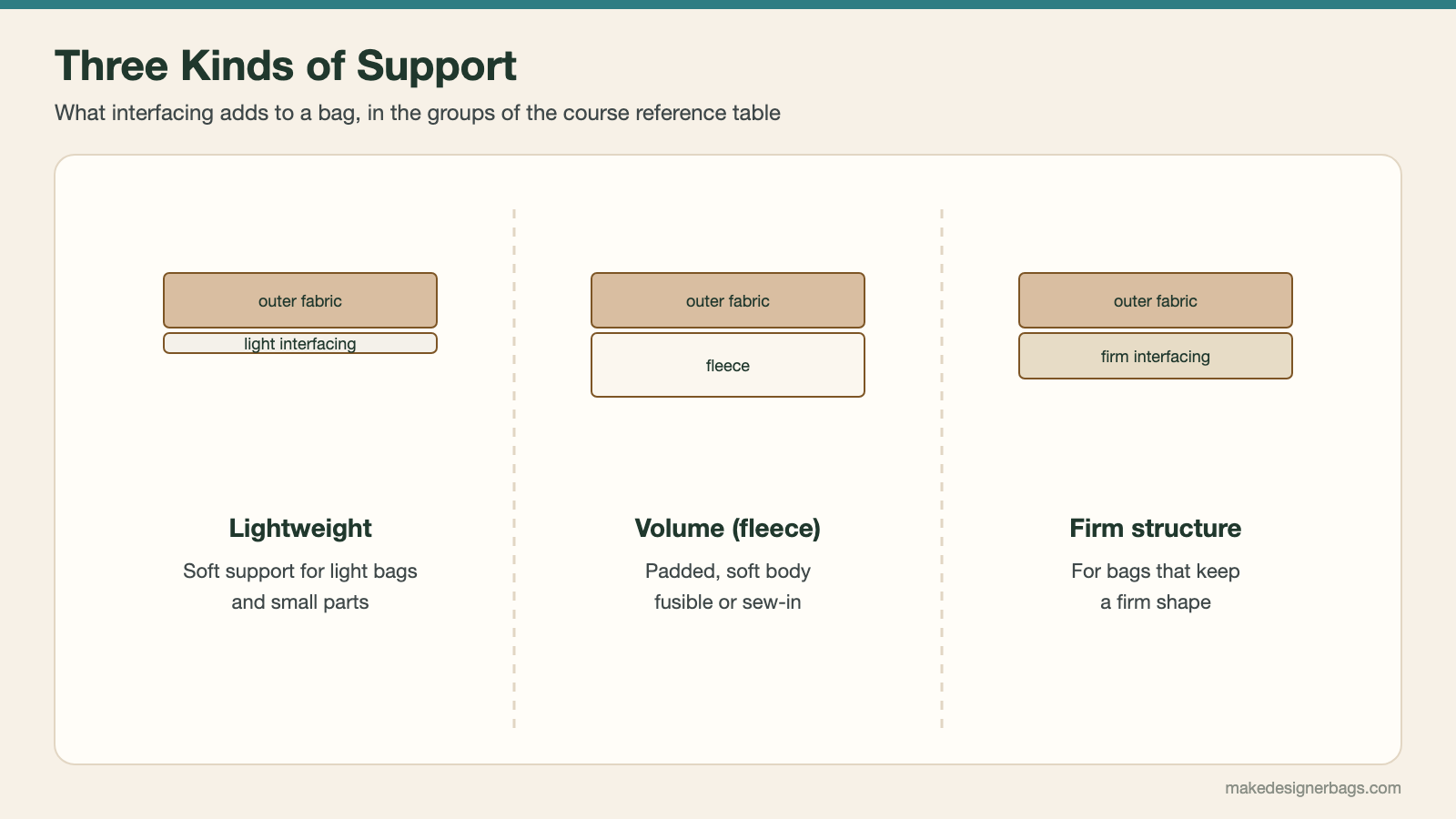
Bag interfacing is the hidden layer that gives the fabric body and structure, so a finished bag looks sturdy instead of soft and floppy. There are two kinds: fusible interfacing, which you iron on, and sew-in interfacing, which you stitch in place. Choose the product by the result you want: light support, padded volume such as fusible fleece, or a firm structure. Always test a small piece on your fabric first.
Interfacing Types at a Glance
| What you want | United States (Pellon) | Europe and Australia (Vlieseline / Vilene) |
|---|---|---|
| Light support for light bags | 30 Lightweight Sew-in, 911FF Featherweight Fusible | H 180, H 200, S 320 (fusible), L 11 (sew-in) |
| Mid-weight to heavy bags | 40 Mid-weight Sew-in, 50 Heavyweight Sew-in | S 13 Firm Sew-in |
| Firm structure | Peltex 70 (sew-in), 71F and 72F (fusible) | S 520 Firm, S 133 Ultra Heavy (fusible) |
| Volume | 987F Fusible Fleece, 988 Fleece, Cloud 9 Dream Fleece | Not listed in the course table |
| Leather, faux leather, heat-sensitive fabric | Not listed in the course table | LE 420 (fusible for leather) |
The table follows the reference guide that comes with the interfacing lesson in our Bag Sewing Fundamentals course. It lists the products we use for bag sewing in the USA, Europe and Australia.
Fusible or Sew-In?
Fusible interfacing has an adhesive side that bonds to the fabric with heat. Applied correctly with an iron, the bond is strong and permanent, so it will not peel away later. Sew-in interfacing has no glue and is stitched to the fabric instead. Both reinforce the fabric; they are simply applied in different ways.
Which Interfacing for Which Fabric
Start with the fabric in your hands. In the accordion handle lessons of the course, a light cotton poplin or a light denim-look cotton is paired with a one-sided fusible interfacing that feels papery and is similar to Vlieseline H 250. A firmer denim, twill or canvas is used there without that interfacing, because it already has enough body.
The same firm H 250 is used for the fabric handles in the course: the handle strip is interfaced before it is folded and stitched, so it can carry weight without stretching or sagging. Products such as Decovil I add a slightly leather-like feel, and Decovil I Light is a softer version.
How to Fuse Interfacing
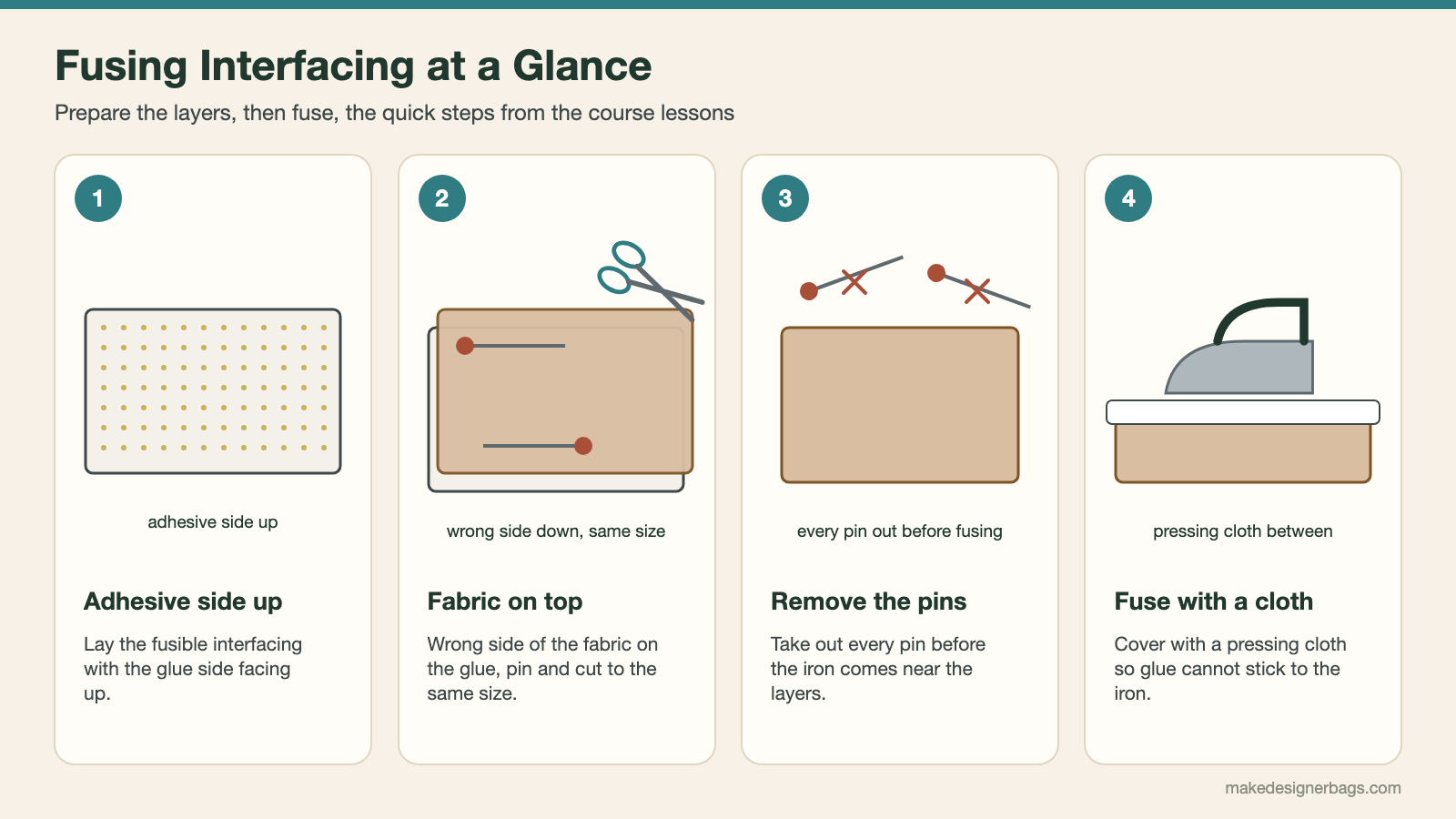
Prepare the Layers
Lay the interfacing adhesive side up.
Place the wrong side of the fabric on the adhesive and align the straight edges.
Pin the layers while you cut, so the interfacing ends up exactly the size of the fabric piece.
Remove every pin before you fuse.
Fuse with a Pressing Cloth
Cover the piece with a pressing cloth, such as a clean cotton or linen kitchen towel, and fuse it with the iron. The cloth stops the adhesive from gumming up the soleplate of your iron. Let the piece cool before you continue.
Keep the course reference table close by, so you can look up the right product whenever you start a new bag.
Common Mistakes
If the right side of the fabric meets the adhesive, the glue ends up on the side that should show.
Without a cloth, adhesive can stick to the iron and damage its soleplate.
Light cotton without support gives a handle or bag panel that lacks stability and shape.
The pins only hold the layers while you cut. Remove every one before the iron touches the layers.
Interfacing is also part of what makes the inside of a bag look finished; read what makes the perfect bag interior for the details that matter in daily use.
See It on Video
Choosing and applying interfacing is covered on video in the Bag Sewing Fundamentals course. See the bag making courses.
Frequently Asked Questions
What is the difference between fusible and sew-in interfacing?
Fusible interfacing has an adhesive side and is ironed onto the wrong side of the fabric. Sew-in interfacing has no glue and is stitched in place. Both reinforce the fabric.
What is fusible fleece used for in bags?
Fusible fleece adds padded volume. The course reference table lists Pellon 987F Fusible Fleece as an iron-on product for volume projects, and 988 Fleece as the sew-in version.
Which interfacing gives a bag a firm structure?
The course table lists Peltex 70, 71F and 72F from Pellon, and Vlieseline S 520 and S 133, for bags with a firm structure.
Does canvas need interfacing?
Not always. In the course, firmer denim, twill and canvas are used without the fusible interfacing that a light cotton needs. Check the fabric's weight and feel first.
Why use a pressing cloth when fusing interfacing?
The pressing cloth keeps the adhesive away from the iron, so it does not gum up the soleplate.