The best bag lining fabric for most handmade bags is a slightly firmer cotton, such as cotton poplin. It is pleasant to sew, gives the bag extra strength and can be washed by hand with a little mild detergent. Cut the lining to fit your bag exactly, and plan its pockets and fasteners before you sew the lining pieces together.
Bag Lining at a Glance
| Question | Answer from the course |
|---|---|
| Which fabric? | Cotton, preferably a slightly firmer cotton such as cotton poplin |
| Why cotton? | Nice to sew, adds strength, washable by hand with mild detergent |
| How is it cut? | Usually like the main bag, so it fits exactly |
| Loose or fixed? | Depends on the bag model |
| What goes on it? | Zipper pockets, slip pockets, a key lanyard |
Why a Firmer Cotton Works Best
In our Bag Sewing Fundamentals course, cotton is the preferred material for linings, and a slightly firmer cotton is the first choice. A firmer cotton gives the bag body from the inside, it is nice to work with, and if the lining ever needs cleaning, cotton is easy to wash by hand with mild detergent.
Cotton can stretch a little. If the lining protrudes slightly at the edges when you join it to the outer bag, that is normal; match the corners, center marks and seams, and trim the excess.
Loose or Fixed Lining
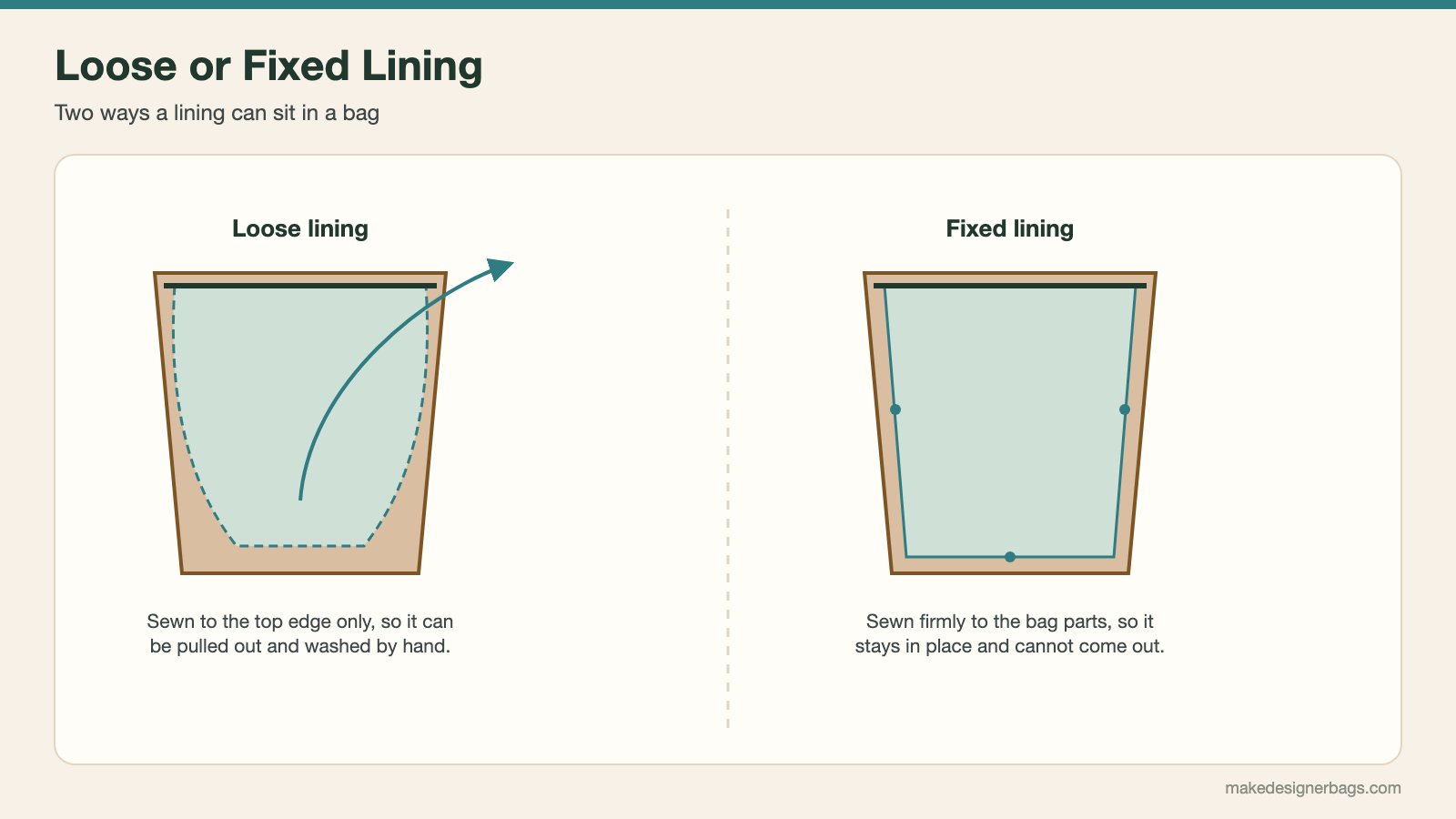
A loose lining is sewn firmly to the upper edge of the bag, sometimes with a facing, but hangs free below it. You can pull the whole lining out and clean it carefully by hand. A fixed lining is sewn to each part of the bag, so it stays in place but cannot be pulled out for cleaning. Which one you use depends on the bag model.
Plan the Inside Before You Sew
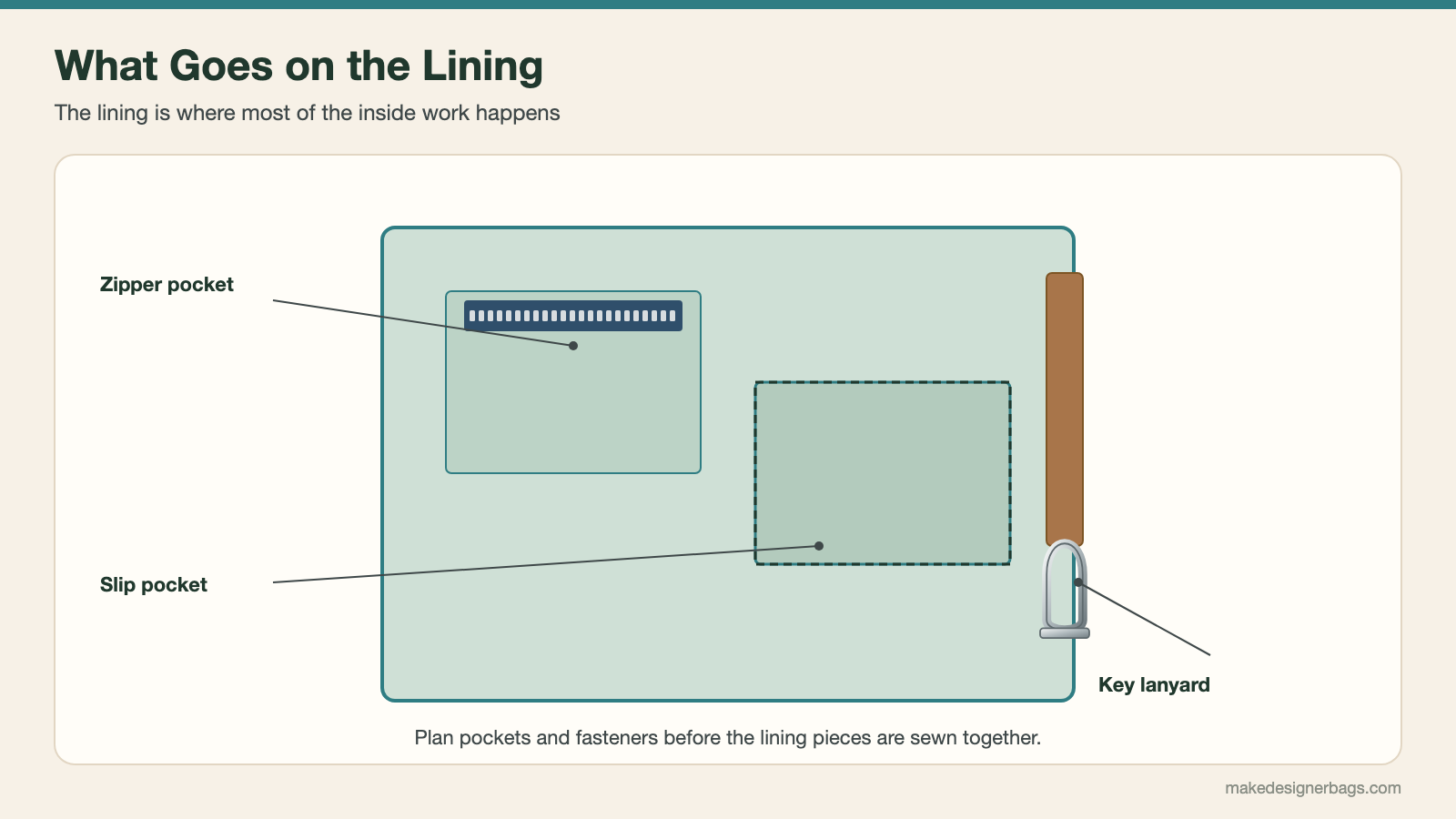
The lining is often where most of the work goes. Before the lining pieces are sewn together, add what you want inside:
A zipper pocket for things that must not fall out
One or more slip pockets in different sizes
A key lanyard, placed so the key can rest on the bag bottom
Contrasting colors work well: one lining side can be light and the other dark, if you like to play with color. For more ideas on a well organised bag, read what makes the perfect bag interior.
Plan for pockets or fasteners before you sew your lining pieces together, so they end up in the right place.
Common Mistakes
The lining has to match the way the bag is built, or it will not fit.
Once the lining is sewn together, pockets and fasteners are hard to add.
A very soft lining gives the bag no support. A firmer cotton adds strength.
See It on Video
Cutting and sewing a bag lining is shown step by step in close-up video in the Bag Sewing Fundamentals course. See the bag making courses.
Frequently Asked Questions
What is the best fabric for lining a bag?
A slightly firmer cotton, such as cotton poplin. It is nice to sew, gives the bag strength and can be washed by hand with mild detergent.
Can a bag lining be washed?
A loose lining, sewn only to the upper edge, can be pulled out and washed carefully by hand with mild detergent, then dried well and put back. A fixed lining cannot be pulled out.
Should the lining be the same size as the bag?
Yes. The lining is usually cut like the main bag, so it fits the bag exactly.
When should I add pockets to a bag lining?
Before you sew the lining pieces together. Afterwards, pockets and fasteners are hard to add.