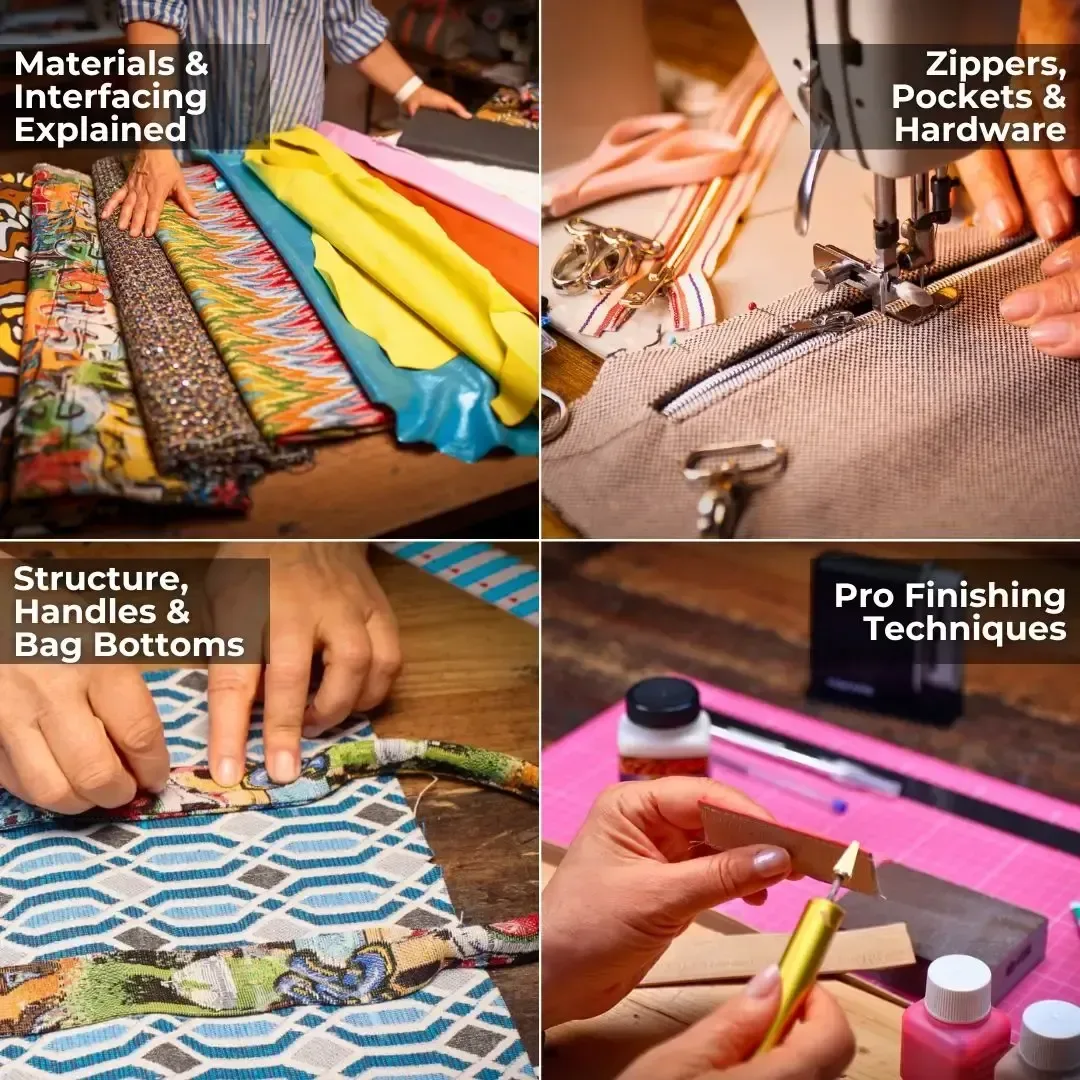
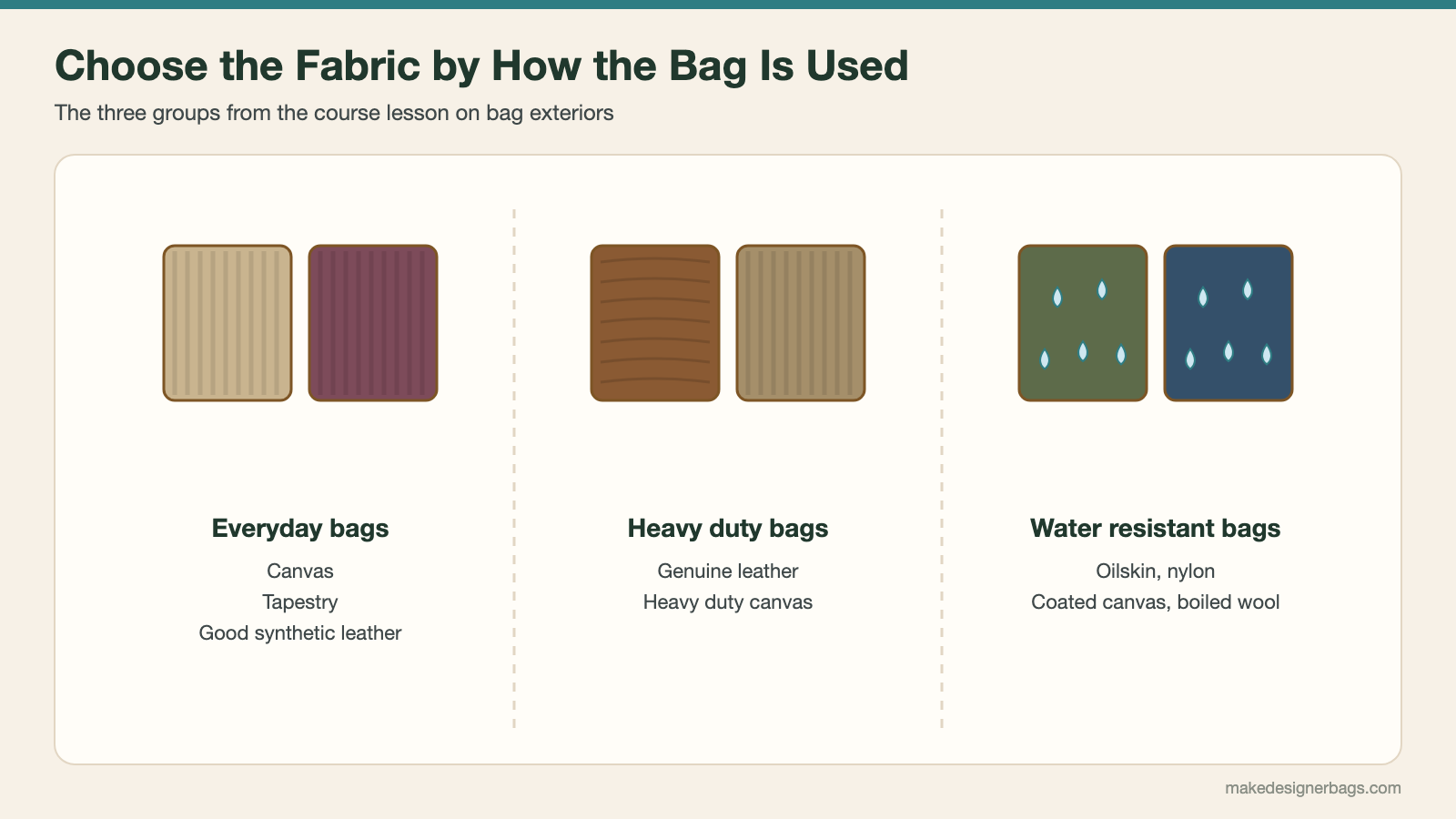
The best fabric for a bag depends on how you will use it. For everyday bags and tote bags, canvas, tapestry and good synthetic leather are sturdy and stylish. For heavy loads, choose genuine leather or heavy duty canvas. For a bag that has to keep its contents dry, use a water resistant material such as oilskin, nylon, coated canvas or boiled wool.
Bag Fabrics at a Glance
| Bag | Fabric | What it offers |
|---|---|---|
| Everyday bag or tote | Canvas | Strong and durable, many colors and patterns |
| Everyday bag | Tapestry | Woven pattern, a touch of elegance for statement bags |
| Everyday bag | Synthetic leather | Budget-friendly, lightweight, easy to maintain |
| Heavy duty bag | Genuine leather | Strength and durability, ages beautifully |
| Heavy duty bag | Heavy duty canvas | Carries heavier loads and rough handling |
| Water resistant bag | Oilskin, nylon, coated canvas, boiled wool | Protects the contents from rain and damp |
Everyday Bags and Tote Bags
An everyday bag goes everywhere, so the fabric should be durable, easy to care for and good-looking. Canvas is the classic: strong, durable and available in many colors and patterns, which makes it the natural choice for a tote bag. Tapestry fabrics are intricately woven and bring elegance to handbags and totes that make a statement. Synthetic leather is a budget-friendly alternative to genuine leather; it is lightweight, easy to maintain and comes in many colors and textures.
Heavy Duty Bags
When a bag has to carry heavier loads or take a lot of wear, choose genuine leather or a heavy duty canvas. Genuine leather is known for its strength and gains character as it ages. For sewing leather on a home machine, the course recommends thinner leather. Curious about the material itself? Read our leather facts.
Water Resistant Bags
Oilskin is treated with oil or wax to resist water; it is durable and flexible with a rugged look. Nylon is light and strong and often has a water-repellent finish. Coated canvas is canvas with a water-resistant coating or a waterproof layer. Boiled wool is another solid option for a bag that has to handle damp weather.
Does the Fabric Need Interfacing?
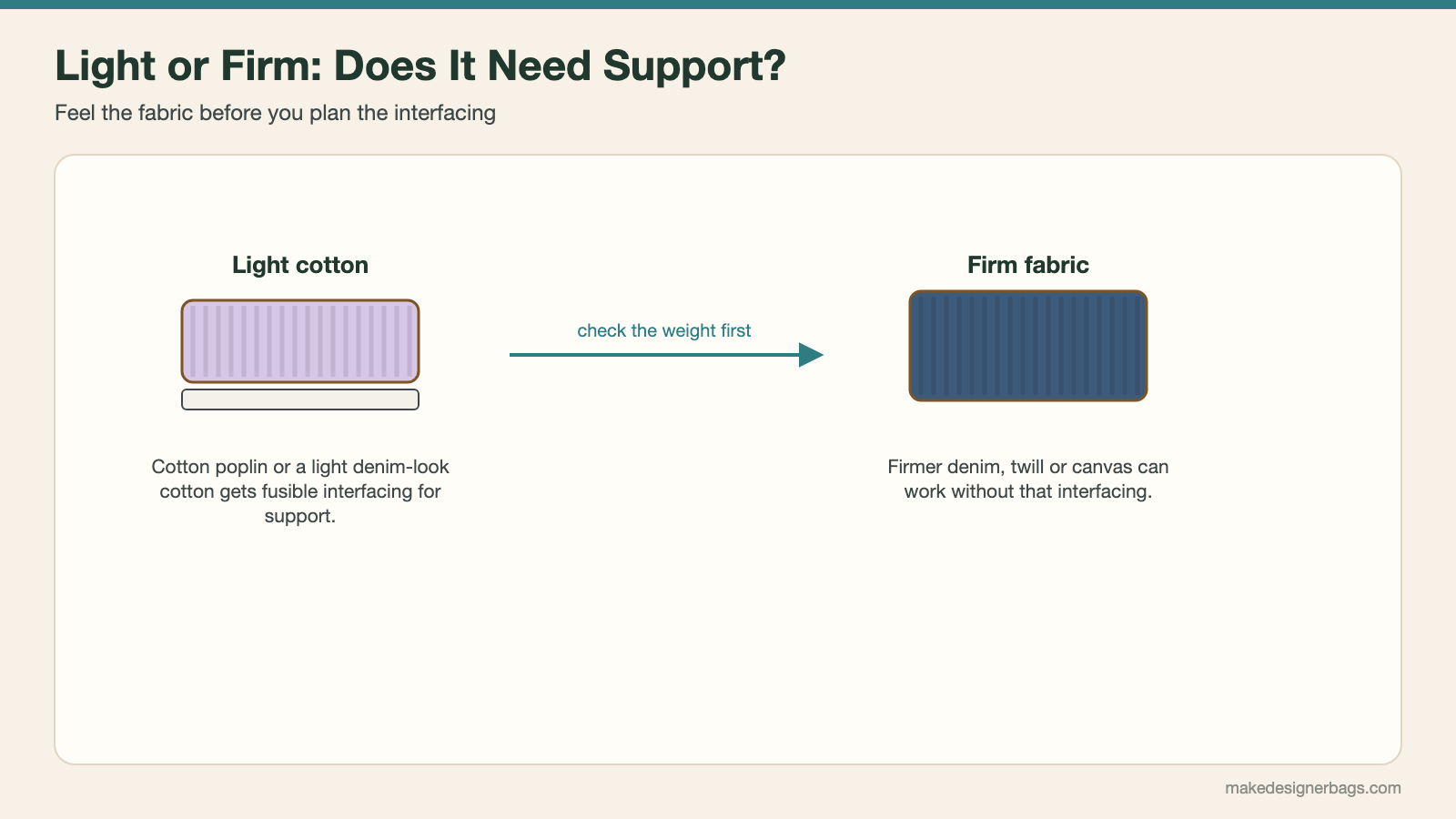
Feel the weight of the fabric before you plan the bag. In the course, a light cotton poplin or a light denim-look cotton is backed with fusible interfacing, while a firmer denim, twill or canvas is used without it.
How These Fabrics Sew
Canvas, tapestry and upholstery fabrics sew on a normal machine with a stronger needle; normal pins work, and the stitches should not be too small.
Synthetic leather, oilskin and genuine leather need a new, strong needle and clips instead of pins, because pin holes stay visible.
Oilskin needs space: it does not crumple well, so lay it out flat when you cut and sew.
Iron fabrics before cutting so they do not shrink later; skip this for fusible webs and materials that must not be ironed.
Thick layers ask more of a machine; our comparison of domestic and industrial sewing machines for bag making helps if you are unsure about yours.
Common Mistakes
A beautiful fabric that does not suit the bag's use wears out or soaks through. Decide the use first.
On synthetic leather, oilskin and leather, pin holes remain visible. Use clips.
Small stitches weaken thick and leather-like materials.
See It on Video
Choosing fabrics for bags is covered on video in the Bag Sewing Fundamentals course. See the bag making courses.
Frequently Asked Questions
What is the best fabric for a tote bag?
Canvas is the classic choice for a tote bag: strong, durable and available in many colors and patterns. Heavy duty canvas suits totes that carry heavier loads.
What fabric is best for a waterproof bag?
The course recommends water resistant materials such as oilskin, nylon, coated canvas or boiled wool for bags that have to protect their contents from rain and damp.
Is synthetic leather good for bags?
Yes, good quality synthetic leather is one of the recommended fabrics for everyday bags. It is budget-friendly, lightweight and easy to maintain.
Can I sew leather bags on a home sewing machine?
The course recommends thinner leather for sewing with a sewing machine, together with a strong needle and clips instead of pins.