Faux leather, also called synthetic leather, is a plastic-based material with a leather look. It is lightweight, easy to maintain, budget-friendly and comes in many colors and textures, which makes it a good choice for everyday bags. To sew it, use a Teflon foot, a stronger needle that is not a leather needle, clips instead of pins and a longer stitch, and never backstitch or press it with a hot iron.
Faux Leather Sewing at a Glance
| Topic | What to do | Why |
|---|---|---|
| Presser foot | Teflon foot, or tape on the sole of a regular foot | The material glides instead of sticking |
| Needle | A new, stronger needle, not a leather needle | A leather needle cuts holes into synthetic leather |
| Holding layers | Wonder Clips | Pin holes stay visible |
| Stitch | Longer than usual, each seam sewn once | Fewer holes keep the material strong |
| Seam ends | Knot by hand, a tiny dot of glue on the knot | Backstitching perforates and can tear it |
| Pressing | Spread the seam and topstitch it | Synthetic leather cannot be ironed open |
Faux Leather or Vegan Leather?
In our lessons, synthetic leather and faux leather mean the same plastic-based material. Vegan leather is a wider term: the fabrics lesson describes it as leather made from pineapple leaves, apple pomace, cork or tree bark, and notes that none of these has really caught on yet, because biodegradable material does not last as well. For sewing, the course treats vegan leather, synthetic leather and genuine leather alike: a robust machine, a new strong needle and stitches that are not too small. If cork interests you, our guide to sewing with cork fabric and cork leather covers it in detail.
What You Need
A Teflon presser foot, or tape for the sole of your regular foot
New, stronger sewing machine needles (no leather needle)
Wonder Clips instead of pins
Fabric or leather glue, used sparingly
A cotton pressing cloth for removing creases
Ribbon to tie rolled material for storage
How to Sew Faux Leather
Set Up the Machine
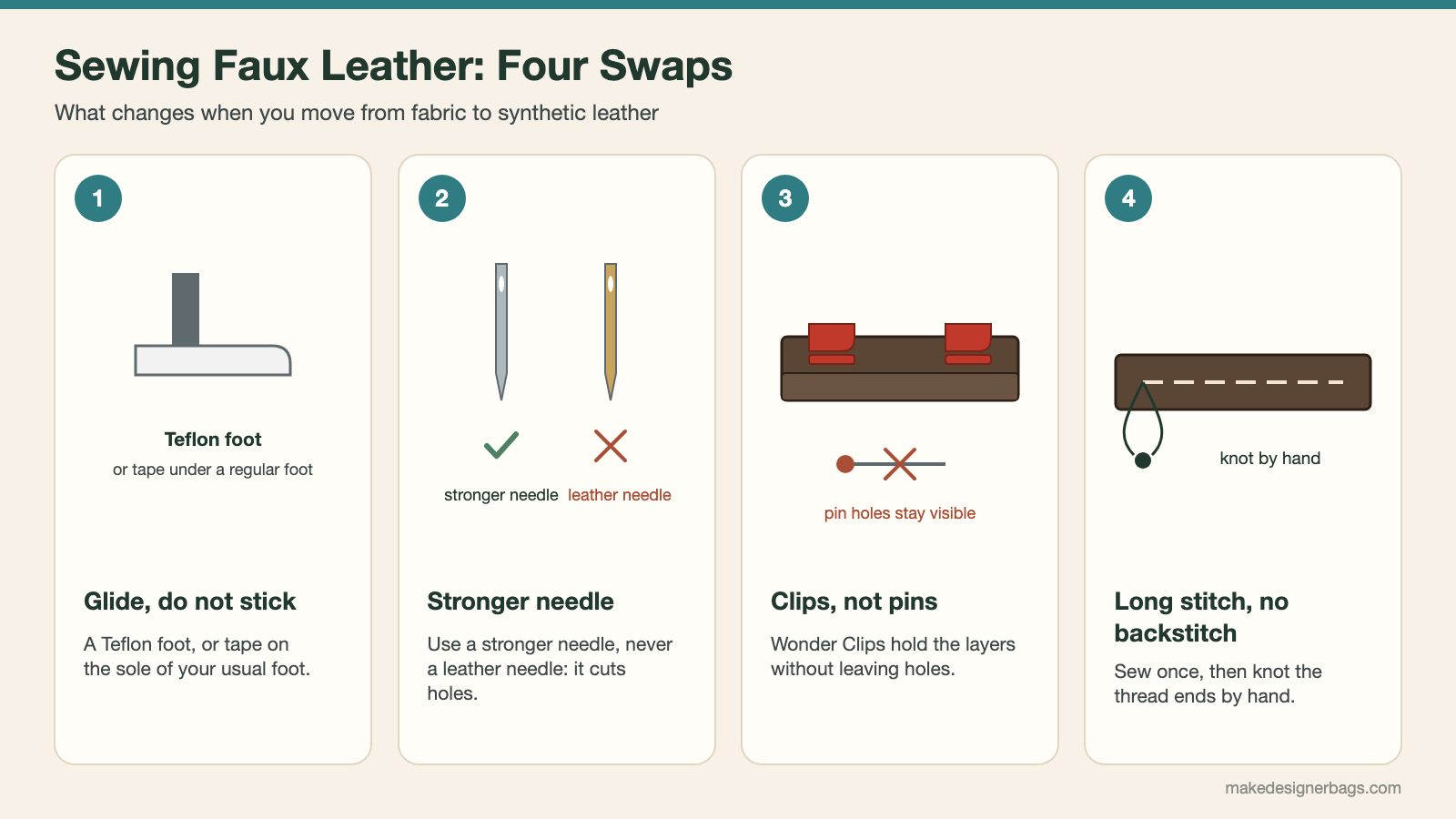
Fit a Teflon foot. If you do not have one, put some tape or adhesive film under your usual foot so the material does not stick. Insert a new, stronger needle. A leather needle is sharp-edged at the tip and cuts holes into synthetic leather, so the course advises against it here. Set a longer stitch than you would for cotton. For more on needle types, see our sewing machine needle guide.
Hold the Layers with Clips
Pins leave holes that stay visible in faux leather, so hold the pieces together with Wonder Clips. When you join faux leather to fabric at a side seam, line the edges up, clip them, and sew a few stitches at a time from each side, checking the alignment as you go, before you sew the full seam. Remove those first stitches afterwards with a seam ripper.
Sew Once, Knot the Ends
Sew each line once, from start to end, without backstitching. Pull the top thread to the wrong side, tie the two ends together in a small knot and add one tiny dot of glue to the knot, because synthetic material can be slippery.
Reinforce Handles
For a faux leather handle, the course glues twill tape onto the wrong side before folding and topstitching. It gives the handle strength so it can carry weight without stretching.
Pressing and Storing Faux Leather
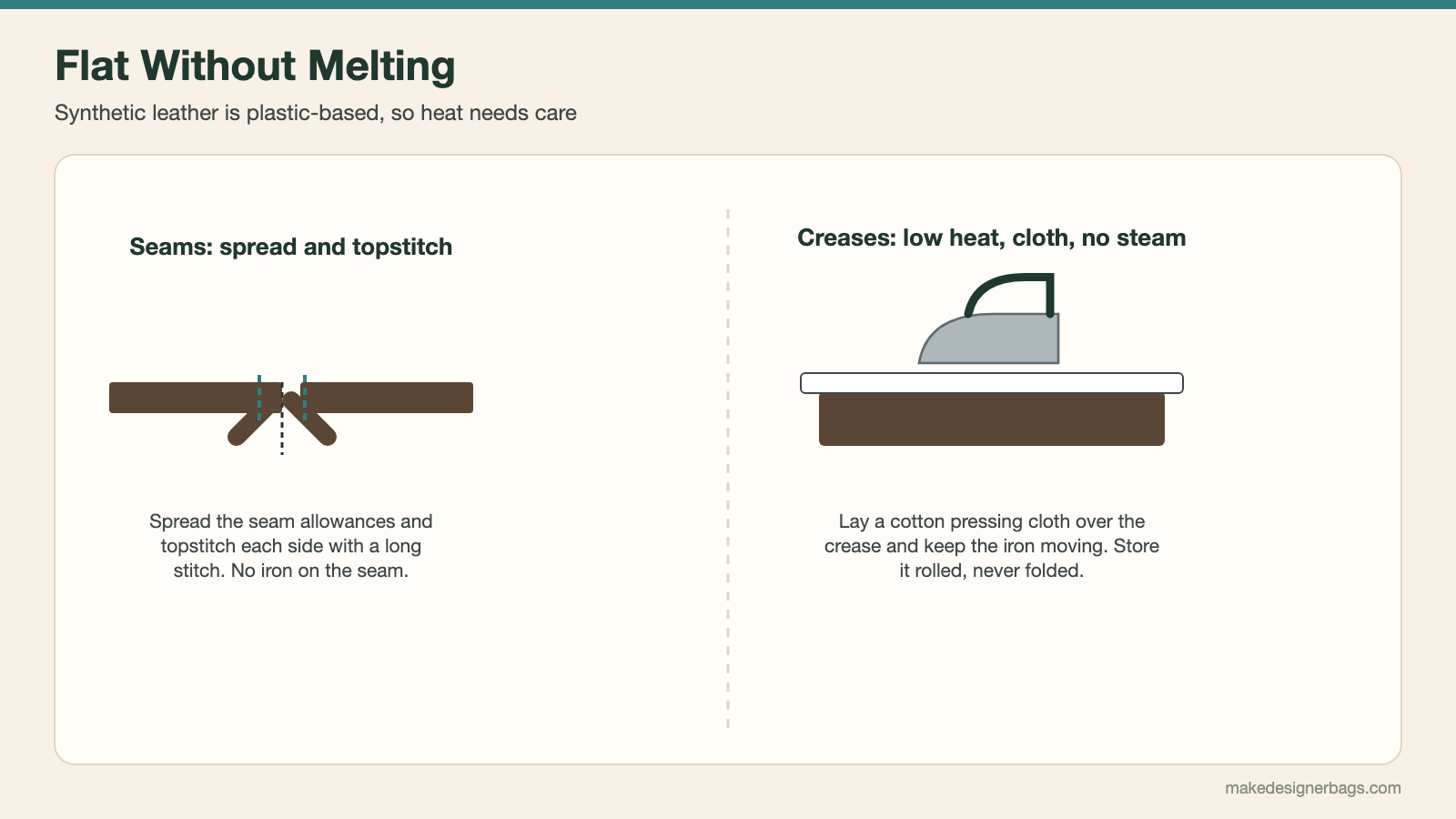
You cannot iron the seams of synthetic leather apart. Spread the seam allowances instead and topstitch them with a long stitch to hold them flat. Creases from storage can be pressed out carefully: set the iron low, turn the steam off, lay a cotton pressing cloth over the crease and keep the iron moving. Store faux leather rolled, like genuine leather, tied loosely with a ribbon so no new creases form.
Common Mistakes
Its cutting tip perforates and weakens synthetic leather.
Going over the same spot again punches extra holes and can tear the material.
Synthetic leather is plastic and can melt. Always use a pressing cloth and low heat.
Folded faux leather creases. Roll it instead.
See It on Video
Sewing faux leather handles and seams is shown step by step in close-up video in the Bag Sewing Fundamentals course. See the bag making courses.
Frequently Asked Questions
What is faux leather made of?
Faux leather, also called synthetic leather, is plastic-based. That is why it needs low heat and a pressing cloth if you iron it at all.
Is vegan leather the same as faux leather?
Not always. In the course, vegan leather means leather alternatives made from pineapple leaves, apple pomace, cork or tree bark, while faux or synthetic leather is plastic-based. You sew them in a similar way.
What needle do I use for faux leather?
A new, stronger sewing machine needle. Avoid a leather needle: its sharp-edged tip cuts holes into synthetic leather.
Can you iron faux leather?
Only carefully, to remove creases: low heat, no steam, a cotton pressing cloth on top and the iron kept moving. Seams cannot be ironed open; topstitch them instead.
Why shouldn't I backstitch on faux leather?
Backstitching punches the same spot again and again, which perforates the material and can tear it. Knot the thread ends by hand instead.