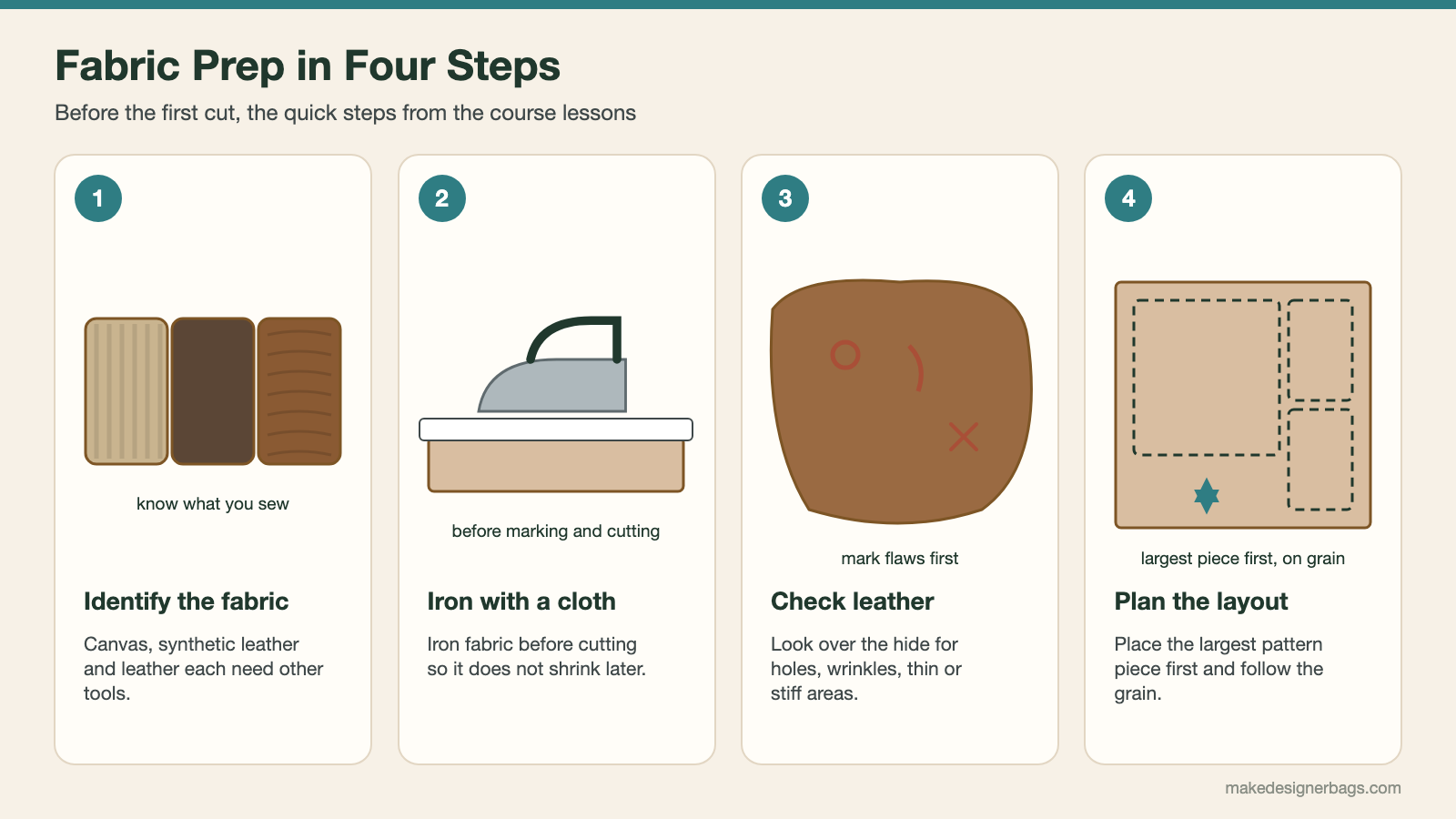
To prepare fabric before sewing a bag, first identify the material, then iron it with a pressing cloth before you mark and cut, so it does not shrink while you sew. Washing is only needed for bags you plan to wash again and again, such as a cotton grocery bag. Check genuine leather for flaws and mark them, smooth out storage creases gently, then lay out the largest pattern piece first along the grain.
Fabric Prep at a Glance
| Step | What you do | Why it matters |
|---|---|---|
| 1 | Identify the fabric | It decides needle, stitch and pins or clips |
| 2 | Iron with a pressing cloth before marking and cutting | Prevents shrinking later |
| 3 | Check genuine leather for flaws and mark them | Flawed areas stay out of your pieces |
| 4 | Smooth creases in stored leather or synthetic leather | Flat material cuts accurately |
| 5 | Place the largest pattern piece first, on grain | Saves material and keeps pieces straight |
Step by Step
Identify the Fabric
Each material behaves differently under the needle. Canvas, tapestry and upholstery fabrics sew on a normal machine with a stronger needle and normal pins. Synthetic leather, oilskin and genuine leather need a new, strong needle and clips instead of pins, because pin holes stay visible. Oilskin needs room: lay it out flat to cut and sew, since it does not crumple well.
Iron Before You Cut
Iron fabrics before marking and cutting, with or without steam as the fabric needs, so they do not shrink during the work. Use a pressing cloth, such as a clean cotton or linen kitchen towel. It prevents an ugly sheen and stains from the iron. Skip this step for fusible webs and for materials that must not be ironed.
Check Genuine Leather
Look over the hide before you cut and mark its flaws: holes, wrinkles, and areas that are too thin or too stiff. Take them into account when you lay out the pattern.
Plan the Layout
Place the largest paper pattern piece first, then distribute the others around it. For every material, pay attention to the grain.
Smoothing Creases Before You Cut
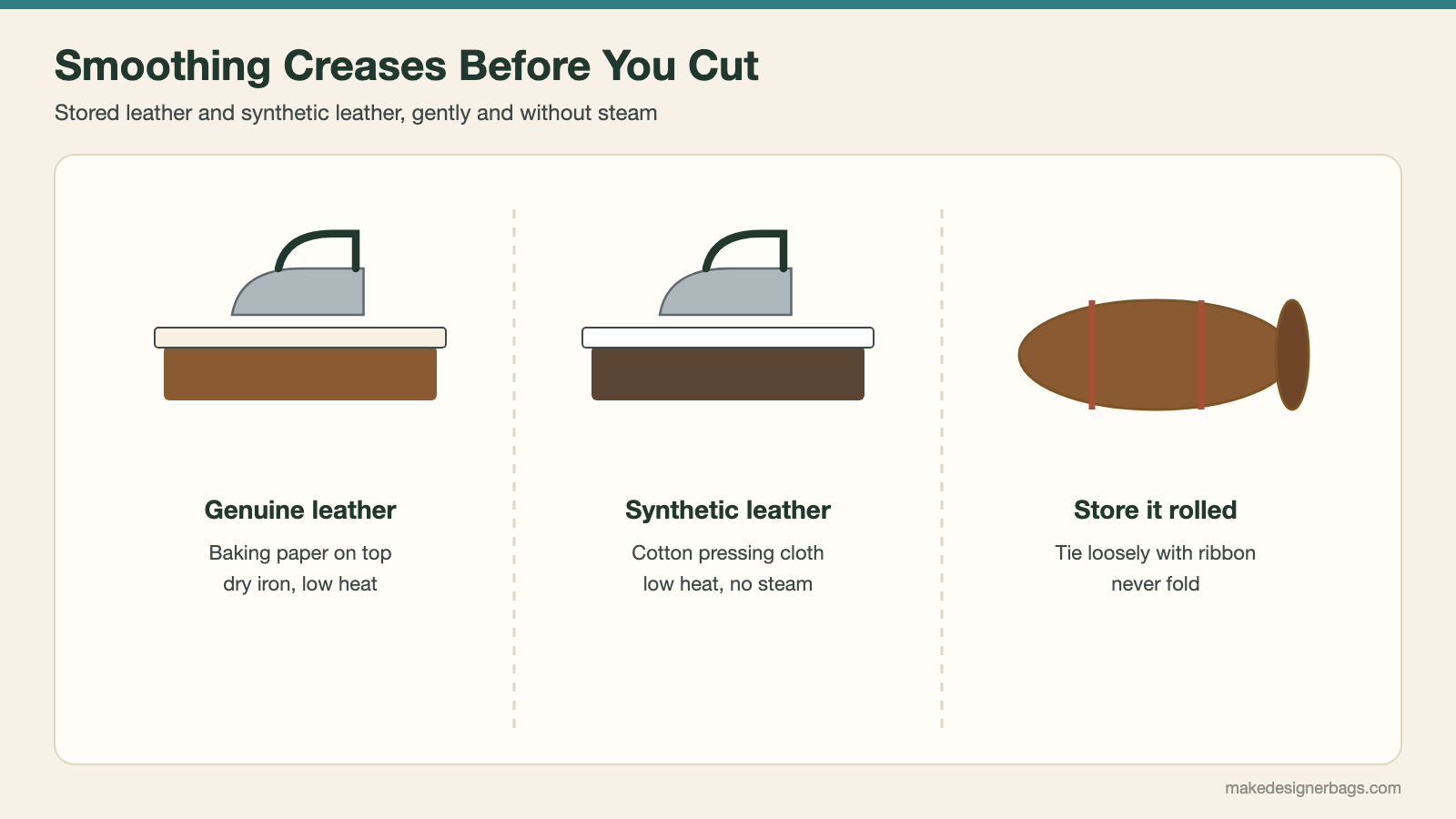
Genuine leather with creases from storage can be smoothed with baking paper and an iron: set it to a low heat, turn the steam off, lay the paper over the crease and iron over it carefully. Synthetic leather is plastic and can melt, so use a cotton pressing cloth instead, low heat and no steam, and keep the iron moving. Neither material is perfectly smooth afterwards; the rest evens out as you sew.
To prevent creases, store both rolled, never folded, and tie the roll loosely with a ribbon or an old shoelace. Tied too tightly, the ribbon makes new creases.
During sewing, iron each seam before the next step. This intermediate ironing makes every following step easier.
Common Mistakes
Unpressed fabric can shrink or distort after it is cut and sewn.
Direct heat leaves a sheen or stains on the fabric.
Without a cloth and low heat, synthetic leather can melt.
Holes or thin spots end up in a visible bag piece.
Good preparation also makes a bag last; our bag care tips pick up where sewing ends.
See It on Video
Preparing fabric and leather is covered on video in the Bag Sewing Fundamentals course. See the bag making courses.
Frequently Asked Questions
Should I wash fabric before sewing a bag?
Usually not. The course recommends washing only for bags you will wash again and again, such as a cotton grocery bag. Ironing before cutting is the important step.
Why iron fabric before cutting?
Ironing before marking and cutting prevents the fabric from shrinking or distorting later, after the pieces are cut and sewn.
How do you get creases out of leather?
Lay baking paper over the crease, set the iron to low heat without steam, and iron carefully over the paper. For synthetic leather, use a cotton pressing cloth instead.
How should I store leather and synthetic leather?
Roll it, never fold it, and tie the roll loosely with a ribbon, so no new creases form.